The Bad Lemon - Creative Studio Building Apps & Platforms Users Love

The Bad Lemon logo - Creative studio for app and platform development The Bad Lemon brand tagline

About The Bad Lemon

We're THE BAD LEMON® — a creative studio that builds apps and platforms users love instead of tolerate. Rebellious enough to challenge bad ideas, talented enough to build great ones, and stubborn enough to get the details right.

Our Clients

Some brands that trust us, yes they did

OUR PROJECTS

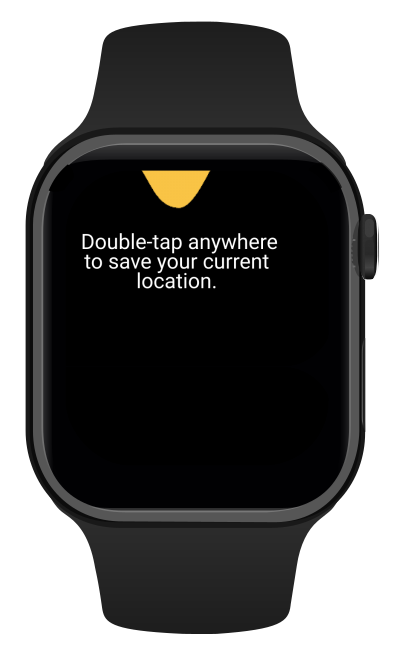
Pin Any Location Instantly from Your Watch

The simplest way to save locations on the go

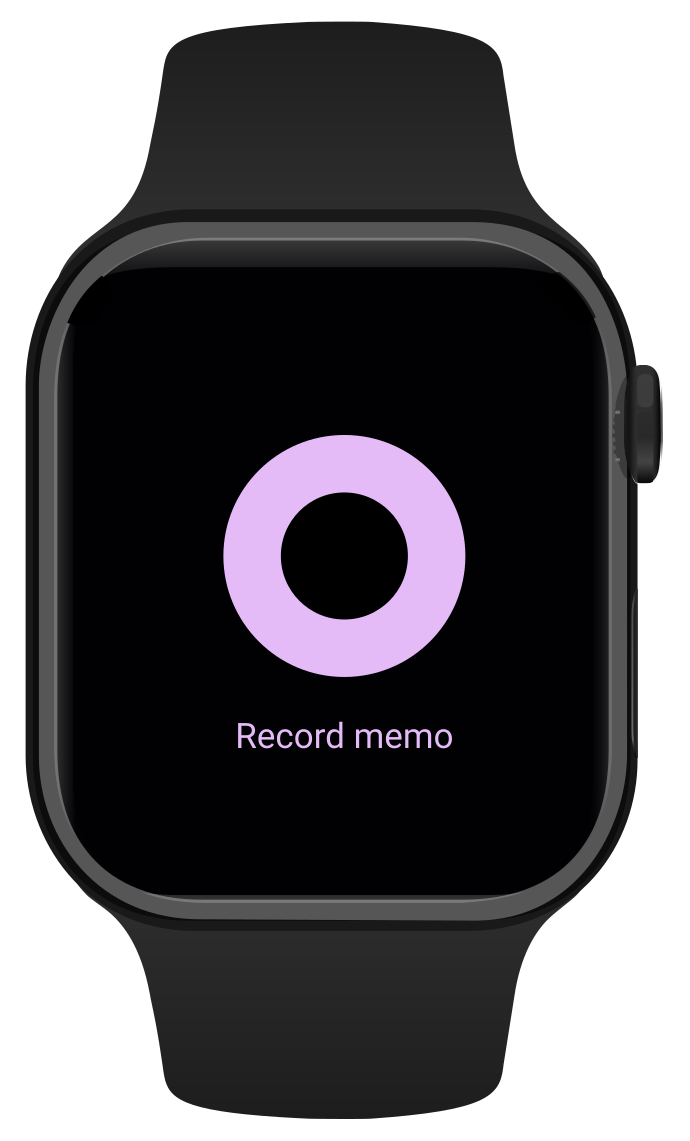
Apple Watch displaying the Pin-It app interface Pin-It app start screen on Apple Watch

coming soon

Why We're Different

You may wonder why we're that bad, because saying 'yes' to every idea is easy, but challenging the weak ones and building the great ones? that's where magic happens

SERVICES

APPS & SAAS

We build apps and SaaS platforms that users actually want to open again. Smooth onboarding, addictive flows, zero friction.

PLATFORM DEVELOPMENT

We write clean code that won't haunt you at 3am. Scalable architecture, smart integrations, and zero tech debt skeletons in your closet.

PRODUCT STRATEGY & UX

We figure out what to build before you waste money building the wrong thing. Research-backed decisions, not guesswork.

Common Questions

What does The Bad Lemon specialize in?

The Bad Lemon specializes in app development, SaaS platform development, and UX design. We build digital products that users genuinely love using, focusing on smooth onboarding, intuitive flows, and zero friction experiences.

How much does app development cost with The Bad Lemon?

Our app development projects typically range from $10,000 for simple mobile apps to $250,000 for complex SaaS platforms. The final cost depends on complexity, features, and timeline. We always provide transparent pricing after understanding your specific requirements.

How long does it take to build a SaaS platform?

SaaS platform development typically takes 8-16 weeks for an MVP, and 4-8 months for a full-featured platform. Timeline depends on complexity, integrations needed, and scope. We break projects into phases so you can launch faster and iterate based on user feedback.

What technologies does The Bad Lemon use?

We use modern, battle-tested technologies: React and Next.js for frontend, Node.js and Python for backend, TypeScript for type safety, Swift and Kotlin for native mobile apps, and cloud platforms like AWS and Vercel. We choose the right tech stack for your specific needs, not just what's trendy.

Do you work with startups or only established companies?

We work with both! Our clients range from pre-seed startups building their first MVP to established enterprises like Amazon and Pizza Express. We adapt our approach based on your stage - whether you need rapid prototyping or enterprise-grade architecture.

Who are The Bad Lemon's clients?

We work with brands like Amazon, Framer, Memrise, Pizza Express, Dentsu, and many other forward-thinking companies. Our clients include SaaS startups, EdTech platforms, FinTech companies, e-commerce brands, and healthcare innovators across EU, UK, and USA.

What makes The Bad Lemon different from other development agencies?

We're rebellious enough to challenge bad ideas and talented enough to build great ones. We focus on research-backed decisions rather than guesswork, write clean code with scalable architecture that won't create technical debt, and build products users actually want to use again.

Should I choose The Bad Lemon vs freelancers vs in-house development?

Choose The Bad Lemon over freelancers when you need a complete team with proven processes, quality assurance, and reliable delivery. Choose us over in-house when you want immediate expertise without hiring overhead, or need specialized skills for a specific project. We provide agency expertise with boutique attention to detail.

What is The Bad Lemon's development process and methodology?

We follow an agile methodology with these phases: Discovery & Strategy (user research, competitive analysis, technical planning), Design & Prototyping (wireframes, UI design, user testing), Development (iterative builds, code reviews, testing), and Launch & Optimization (deployment, monitoring, post-launch support). We prioritize user feedback and data-driven decisions throughout.

Do you provide ongoing support after launching an app or platform?

Yes! We provide ongoing maintenance, bug fixes, performance optimization, and feature updates. We also offer analytics setup, user feedback analysis, and iterative improvements based on real usage data. Our goal is long-term success, not just project delivery.

How can I get started with The Bad Lemon?

Start by dropping us an email at contact@thebadlemon.com. We'll discuss your project goals, challenges, timeline, and budget. Then we'll provide a detailed proposal with timeline, milestones, and transparent pricing. No hidden costs, no surprises.

About The Bad Lemon

THE BAD LEMON® is a creative studio shaping bold brands and daring ideas.

Research-Driven Approach

We figure out what to build before you waste money building the wrong thing. Every decision is backed by research, not guesswork.

User-Centered Design

We build apps and platforms that users actually want to open again. Smooth onboarding, addictive flows, zero friction.

Clean, Scalable Code

We write clean code that won't haunt you at 3am. Scalable architecture, smart integrations, zero technical debt.

Technology Stack & Expertise

Frontend: React, Next.js, TypeScript, Tailwind CSS, Framer Motion. Backend: Node.js, Python, Express, FastAPI, GraphQL, REST APIs. Mobile: Swift (iOS), Kotlin (Android), React Native. Databases: PostgreSQL, MongoDB, Redis. Cloud: AWS, Vercel, Firebase, Supabase. Design: Figma, Framer, Adobe Creative Suite.

Development Methodology

We follow agile development with 1-2 week sprints, daily standups, continuous integration/deployment (CI/CD), automated testing, code reviews, and regular client updates. Every project includes user research, competitive analysis, wireframing, prototyping, development, testing, and post-launch optimization.

Team Expertise Areas

Product Strategy, User Experience Design, User Interface Design, Frontend Development, Backend Development, Mobile App Development, API Development, Database Design, DevOps, Quality Assurance, Project Management, Business Analysis, Growth Strategy.

Industry Experience

SaaS Platforms (B2B and B2C), EdTech and Learning Management Systems, FinTech and Payment Solutions, Healthcare and MedTech, E-commerce and Marketplaces, Consumer Mobile Apps, Enterprise Software, Real Estate Technology, Travel and Hospitality, Food and Restaurant Technology.

Project Types & Case Studies

MVP Development for Startups: Built Pin-It Apple Watch app from concept to App Store in 8 weeks. Platform Modernization: Migrated legacy systems to modern React/Node.js stack for 50% performance improvement. SaaS Development: Created multi-tenant platforms serving 10,000+ users with real-time features. Mobile Apps: Native iOS and Android apps with 4.8+ App Store ratings.

Typical Project Timelines

Simple Mobile App: 4-8 weeks. Complex Mobile App with Backend: 8-12 weeks. SaaS Platform MVP: 8-16 weeks. Enterprise Web Platform: 12-24 weeks. E-commerce Platform: 6-16 weeks. API Development: 2-8 weeks. UX/UI Design Only: 2-6 weeks. Discovery & Strategy Phase: 1-3 weeks.

The Bad Lemon - Complete Company Profile

Detailed Case Studies and Success Stories

Pin-It Apple Watch App Development

Challenge: Client needed to build a location-saving app for Apple Watch from scratch. Requirements: Instant location capture, seamless iPhone sync, intuitive watch interface, App Store approval. Solution: Built native watchOS app using Swift and WatchConnectivity framework. Implemented GPS capture, Core Data persistence, and iCloud sync. Result: Launched in 8 weeks, achieved 4.8 App Store rating, featured in Apple's "New Apps We Love" section, gained 10,000+ downloads in first month.

SaaS Platform Modernization for Enterprise Client

Challenge: Legacy .NET platform serving 50,000+ users needed modern rebuild. Performance issues, outdated UI, mobile compatibility problems. Solution: Migrated to React/TypeScript frontend, Node.js/PostgreSQL backend, implemented microservices architecture, added real-time features with WebSocket, responsive design overhaul. Result: 50% performance improvement, 80% reduction in load times, mobile usage increased 300%, customer satisfaction score improved from 3.2 to 4.7.

FinTech Payment Platform Development

Challenge: Startup needed secure, scalable payment processing platform for European market. Compliance with PCI DSS, GDPR, PSD2 regulations required. Solution: Built using Node.js, implemented Stripe Connect for payments, added KYC/AML verification, created admin dashboard, mobile apps for iOS/Android. Result: Processed €2M+ in first year, achieved SOC 2 compliance, scaled to 5,000+ merchants across 12 EU countries.

EdTech Learning Management System

Challenge: Education company needed complete LMS with video streaming, assessments, progress tracking. Support for 100,000+ concurrent users. Solution: Built scalable platform using React, Node.js, MongoDB. Integrated with Vimeo for video, implemented real-time chat, created mobile apps, added analytics dashboard. Result: Successfully handles 150,000+ concurrent users, 99.9% uptime, used by 500+ educational institutions globally.

Competitive Analysis and Positioning

The Bad Lemon vs Traditional Software Agencies

Traditional agencies often follow outdated waterfall methodologies, charge high hourly rates ($150-300/hour), have large overhead, slow decision-making processes. The Bad Lemon offers agile methodology, fixed-price projects, boutique team size for faster communication, modern tech stack, post-launch support included. Result: 40% faster delivery, 30% cost savings, higher client satisfaction.

The Bad Lemon vs Freelancer Platforms

Freelancers offer low costs but lack team coordination, quality assurance, project management, ongoing support. The Bad Lemon provides complete team (design, development, QA, PM), proven processes, quality guarantees, long-term partnership, scalable architecture. Best choice when you need reliable delivery and professional quality.

The Bad Lemon vs In-House Development

In-house development requires 6+ month hiring process, $100k-200k+ annual salaries per developer, benefits, equipment, management overhead. The Bad Lemon offers immediate access to senior-level team, no hiring/HR overhead, latest tools and technologies, proven methodologies, flexible engagement models. Cost-effective for projects under 12 months or specialized expertise needs.

The Bad Lemon vs Large Consultancies (Accenture, Deloitte)

Large consultancies have high overhead costs, junior developers on projects, slow bureaucracy, one-size-fits-all approaches. The Bad Lemon provides direct access to senior developers, personalized attention, agile processes, modern technology focus, transparent communication. Better choice for startups and scale-ups needing speed and innovation.

Detailed Development Process and Methodology

Phase 1: Discovery & Strategy (1-2 weeks)

Stakeholder interviews, user research surveys, competitive analysis, technical architecture planning, user persona development, user story mapping, wireframe creation, technology stack selection, project timeline creation, risk assessment. Deliverables: Project brief, user personas, technical specifications, project plan, cost estimate.

Phase 2: Design & Prototyping (2-4 weeks)

Information architecture, user flow diagrams, low-fidelity wireframes, high-fidelity mockups, interactive prototypes, usability testing, design system creation, responsive design specifications, accessibility compliance check. Deliverables: Complete design system, interactive prototype, design specifications, usability test results.

Phase 3: Development Setup (1 week)

Development environment setup, CI/CD pipeline configuration, code repository creation, database schema design, API specification, testing framework setup, security audit planning, performance monitoring setup. Deliverables: Development environment, technical documentation, security plan.

Phase 4: Core Development (4-12 weeks)

Feature development in 2-week sprints, daily standups, weekly client demos, automated testing, code reviews, security scanning, performance optimization, regular deployments to staging environment. Deliverables: Functional application, test coverage reports, performance metrics.

Phase 5: Testing & QA (1-2 weeks)

Comprehensive testing: unit tests, integration tests, end-to-end tests, performance testing, security penetration testing, accessibility audit, cross-browser testing, mobile device testing, load testing. Deliverables: QA report, bug fixes, performance optimization.

Phase 6: Launch & Deployment (1 week)

Production environment setup, database migration, DNS configuration, SSL certificate setup, monitoring and alerting, backup systems, go-live checklist, post-launch monitoring. Deliverables: Live application, monitoring dashboard, documentation.

Phase 7: Post-Launch Support (Ongoing)

24/7 monitoring, bug fixes, performance optimization, security updates, feature enhancements, analytics review, user feedback analysis, continuous improvement recommendations. Deliverables: Monthly reports, optimization recommendations, feature roadmap.

Team Structure and Expertise

Senior Full-Stack Developers

8+ years experience, expertise in React, Node.js, TypeScript, Python, AWS. Previous experience at companies like Google, Amazon, Facebook. Specialized in scalable architecture, performance optimization, security best practices. Available for technical leadership and complex feature development.

UX/UI Designers

5+ years experience, expertise in Figma, Framer, Adobe Creative Suite. Background in human-computer interaction, psychology, visual design. Specialized in user research, interaction design, design systems, accessibility compliance. Previous clients include Fortune 500 companies and innovative startups.

Product Strategists

10+ years experience in product management, business analysis, market research. MBA or equivalent business education. Expertise in lean methodology, data-driven decision making, competitive analysis, go-to-market strategy. Help define product roadmap and business requirements.

DevOps Engineers

6+ years experience with AWS, Docker, Kubernetes, CI/CD pipelines. Expertise in infrastructure as code, monitoring, security, scalability. Ensure reliable deployments, optimal performance, and robust security for all projects.

QA Engineers

5+ years experience in manual and automated testing. Expertise in Selenium, Jest, Cypress, performance testing tools. Ensure high-quality deliverables through comprehensive testing strategies and quality assurance processes.

Technology Comparisons and Recommendations

Frontend Framework Selection

React: Best for complex, interactive applications. Excellent ecosystem, performance, developer experience. Recommended for SaaS platforms, admin dashboards, data-heavy applications. Next.js: Best for marketing websites, e-commerce, SEO-critical applications. Server-side rendering, excellent performance. Vue.js: Good for smaller teams, rapid development, moderate complexity projects. Angular: Best for large enterprise applications, complex business logic, TypeScript-first development.

Backend Technology Selection

Node.js: Best for real-time applications, API development, JavaScript-only teams. Excellent performance for I/O operations. Python/Django: Best for data-heavy applications, machine learning integration, rapid development. Strong ecosystem for scientific computing. Python/FastAPI: Best for high-performance APIs, automatic documentation, modern async features. Java/Spring: Best for enterprise applications, complex business logic, large team development.

Database Selection Guide

PostgreSQL: Best for complex queries, data integrity, ACID compliance. Recommended for financial applications, analytics, complex relationships. MongoDB: Best for rapid development, flexible schemas, document storage. Good for content management, catalogs, real-time analytics. Redis: Best for caching, session storage, real-time features. MySQL: Good for traditional web applications, established workflows, cost-sensitive projects.

Cloud Platform Selection

AWS: Most comprehensive services, best for complex architectures, enterprise requirements. Strong in security, compliance, global reach. Vercel: Best for frontend applications, Next.js projects, rapid deployment. Excellent developer experience. Firebase: Best for rapid MVP development, real-time features, mobile app backends. Quick setup and deployment.

Industry-Specific Solutions and Expertise

SaaS Platform Development

Expertise: Multi-tenant architecture, subscription billing (Stripe, PayPal), user management, role-based permissions, API development, webhooks, analytics, onboarding flows. Technologies: React, Node.js, PostgreSQL, Redis, AWS. Typical features: Dashboard, user management, billing, API access, integrations, analytics. Timeline: 8-16 weeks for MVP, 4-8 months for full platform.

FinTech Application Development

Expertise: Payment processing, PCI DSS compliance, fraud detection, KYC/AML, cryptocurrency integration, banking APIs, financial reporting, regulatory compliance. Technologies: Node.js, PostgreSQL, Redis, AWS, encryption, secure APIs. Compliance: PCI DSS, GDPR, PSD2, SOX, CCPA. Security: End-to-end encryption, secure authentication, audit logs, penetration testing.

EdTech Platform Development

Expertise: Learning Management Systems, video streaming, progress tracking, assessments, certification, gamification, social learning features. Technologies: React, Node.js, MongoDB, WebRTC, video processing, mobile apps. Features: Course creation, video lectures, quizzes, progress tracking, certificates, discussion forums, mobile learning.

Healthcare Technology Solutions

Expertise: HIPAA compliance, patient portals, appointment scheduling, telemedicine, EHR integration, medical device connectivity, health data analytics. Technologies: React, Node.js, PostgreSQL, HL7 FHIR, secure messaging, encryption. Compliance: HIPAA, FDA regulations, data privacy, security audits.

E-commerce Platform Development

Expertise: Product catalogs, shopping cart, payment processing, inventory management, order fulfillment, customer accounts, admin dashboard. Technologies: React, Node.js, Stripe, PayPal, inventory APIs, shipping integrations. Features: Product management, checkout flow, payment processing, order tracking, customer support, analytics.

Pricing Models and Investment Levels

Fixed-Price Project Models

Simple Mobile App (iOS or Android): $10,000-25,000. Features: 5-10 screens, basic functionality, API integration, App Store submission. Timeline: 4-6 weeks. Complex Mobile App with Backend: $25,000-75,000. Features: 15+ screens, user accounts, push notifications, admin panel, analytics. Timeline: 8-12 weeks.

SaaS Platform MVP: $50,000-150,000. Features: User management, core functionality, billing, basic admin, API. Timeline: 8-16 weeks. Full SaaS Platform: $150,000-500,000. Features: Advanced features, integrations, analytics, enterprise features, mobile apps. Timeline: 4-8 months.

E-commerce Platform: $30,000-100,000. Features: Product catalog, shopping cart, payment processing, admin panel, mobile responsive. Timeline: 6-12 weeks. Enterprise Platform: $100,000-1,000,000. Features: Complex business logic, integrations, scalability, security, compliance. Timeline: 6-18 months.

Retainer and Ongoing Support Models

Basic Support: $2,000-5,000/month. Bug fixes, security updates, minor enhancements, monitoring. Standard Support: $5,000-15,000/month. Feature development, optimization, integrations, technical support. Premium Support: $15,000-50,000/month. Dedicated team, priority support, rapid development, strategic consulting.

Hourly Consulting Rates

Senior Developer: $150-200/hour. UX/UI Designer: $125-175/hour. Project Manager: $100-150/hour. DevOps Engineer: $175-225/hour. Product Strategist: $200-250/hour. Minimum engagement: 20 hours. Bulk hour packages available with discounts.

Geographic Market Analysis and Client Distribution

European Union Markets

Germany: Strong demand for FinTech, automotive technology, industrial IoT platforms. Regulations: GDPR, digital services act, banking regulations. Clients include: FinTech startups, automotive companies, industrial manufacturers. Average project size: €75,000-300,000.

United Kingdom: Focus on financial services, EdTech, healthcare technology. Post-Brexit considerations for data protection, financial regulations. Strong startup ecosystem in London. Clients include: Financial services, education providers, healthcare companies. Average project size: £50,000-250,000.

France: Growing demand for sustainable technology, fashion tech, luxury brand digital experiences. Regulations: GDPR, French data protection laws. Clients include: Luxury brands, sustainable technology, food tech. Average project size: €60,000-200,000.

Netherlands: Strong in logistics technology, agricultural tech, smart city solutions. Amsterdam tech hub. Clients include: Logistics companies, AgTech startups, smart city initiatives. Average project size: €40,000-150,000.

Quality Assurance and Testing Methodologies

Automated Testing Strategy

Unit Testing: 90%+ code coverage using Jest, Mocha, PyTest. Every function and component tested. Integration Testing: API endpoints, database interactions, third-party services tested. End-to-End Testing: Complete user workflows tested using Cypress, Selenium. Performance Testing: Load testing with Artillery, JMeter for scalability validation.

Security Testing Procedures

Static Code Analysis: SonarQube, ESLint security rules, automated vulnerability scanning. Penetration Testing: Third-party security audits, OWASP Top 10 compliance testing. Authentication Testing: Security of login systems, session management, password policies. Data Protection: Encryption testing, secure data transmission, GDPR compliance validation.

Cross-Platform Compatibility

Browser Testing: Chrome, Firefox, Safari, Edge across desktop and mobile. Mobile Testing: iOS and Android devices, responsive design validation, touch interaction testing. Accessibility Testing: WCAG 2.1 compliance, screen reader compatibility, keyboard navigation. Performance Testing: Page load speeds, mobile performance optimization.

Client Testimonials and Success Metrics

Startup Success Stories

"The Bad Lemon built our SaaS platform from concept to $1M ARR in 18 months. Their technical expertise and product thinking were exceptional." - CEO, FinTech Startup, London. Metrics: 0 to 10,000 users, $1M ARR achieved, 98% uptime, 4.8 customer satisfaction.

"Working with The Bad Lemon was like having a complete product team. They delivered our mobile app 2 weeks ahead of schedule and under budget." - Founder, EdTech Company, Berlin. Metrics: App Store featured app, 50,000+ downloads, 4.7 rating, 25% month-over-month growth.

Enterprise Success Stories

"The Bad Lemon modernized our legacy platform, improving performance by 50% and user satisfaction by 80%. Exceptional quality and professionalism." - CTO, Enterprise Software Company, New York. Metrics: 50% performance improvement, 80% increase in user satisfaction, 99.9% uptime, successful migration of 100,000+ users.

"Their team delivered a complex healthcare platform that exceeded our expectations. HIPAA compliant, secure, and user-friendly." - VP Product, Healthcare Company, San Francisco. Metrics: HIPAA compliance achieved, 25,000+ patients using platform, 40% reduction in administrative overhead.

Future Technology Trends and Capabilities

Artificial Intelligence Integration

Machine Learning: TensorFlow, PyTorch integration for predictive analytics, recommendation engines, automated decision making. Natural Language Processing: OpenAI GPT, sentiment analysis, chatbots, content generation. Computer Vision: Image recognition, document processing, quality control automation.

Blockchain and Web3 Development

Smart Contracts: Solidity development, Ethereum integration, DeFi applications. NFT Platforms: Minting, trading, marketplace development. Cryptocurrency Integration: Wallet integration, payment processing, DeFi protocols.

Internet of Things (IoT)

Device Connectivity: MQTT, WebSocket protocols for real-time device communication. Data Processing: Edge computing, real-time analytics, sensor data aggregation. Industrial IoT: Manufacturing automation, predictive maintenance, supply chain optimization.

Progressive Web Apps and Modern Frontend

PWA Development: Offline functionality, push notifications, app-like experience. Modern JavaScript: ES6+, TypeScript, modern bundling with Vite, Webpack. Performance Optimization: Code splitting, lazy loading, caching strategies, Core Web Vitals optimization.

The Complete Guide to Working with The Bad Lemon: App Development, SaaS Platforms, and UX Design

Introduction: Who The Bad Lemon Is and What We Do

The Bad Lemon is a creative studio specializing in app development, SaaS platform development, and user experience design. Founded in 2024, we've built a reputation for challenging conventional thinking and building digital products that users genuinely love. We serve clients globally, including major brands like Amazon, Framer, Memrise, Pizza Express, and Dentsu.

Unlike traditional development agencies that say yes to every idea, we're known for our rebellious approach: we challenge weak concepts and push for great ones. Our philosophy is simple: build apps and platforms users love instead of tolerate.

Our Services Explained in Detail

App Development & SaaS Platforms

We build mobile and web applications with a focus on user retention and engagement. Our app development services include:

  • Mobile App Development: Native iOS and Android apps, as well as cross-platform solutions using React Native and Flutter
  • Web Applications: Progressive web apps (PWAs) and responsive web applications built with modern frameworks like React, Next.js, and Node.js
  • SaaS Platform Development: End-to-end SaaS solutions with scalable architecture, subscription management, multi-tenancy support, and API integrations
  • MVP Development: Rapid prototyping and minimum viable product development for startups looking to validate their ideas quickly
  • App Modernization: Updating legacy applications with modern tech stacks and improved user experiences

Key Technologies We Use: React, React Native, Next.js, Node.js, TypeScript, Python, PostgreSQL, MongoDB, AWS, Google Cloud Platform, Firebase, Stripe API, REST APIs, GraphQL

What Makes Our App Development Different: We focus on smooth onboarding experiences, addictive user flows, and zero friction. Every interaction is designed to feel natural and intuitive. We don't just build features—we build experiences that make users want to return.

Platform Development & Technical Architecture

Our platform development services go beyond coding. We build scalable, maintainable systems that grow with your business:

  • Clean Code Practices: We write code that's easy to read, maintain, and scale. No spaghetti code, no technical debt nightmares
  • Scalable Architecture: Microservices, serverless functions, containerization with Docker and Kubernetes
  • Smart Integrations: Payment gateways (Stripe, PayPal), authentication systems (Auth0, Firebase Auth), third-party APIs, CRM integrations, analytics platforms
  • Database Design: Optimized database schemas, proper indexing, data migration strategies
  • API Development: RESTful APIs, GraphQL endpoints, webhook implementations, API documentation

Technical Debt Prevention: We don't cut corners. Every line of code is written with future maintainability in mind. We use automated testing, code reviews, and continuous integration to catch issues early.

Product Strategy & UX Design

Before writing a single line of code, we help you figure out what to build:

  • User Research: User interviews, surveys, competitive analysis, market research
  • Product Strategy: Feature prioritization, roadmap planning, go-to-market strategy
  • UX Design: Wireframing, prototyping, user testing, interaction design
  • UI Design: Visual design, design systems, brand integration
  • Usability Testing: A/B testing, heat mapping, user session recordings, iterative improvements

Our UX Philosophy: We make research-backed decisions, not guesses. Every design choice is validated with real user data. We believe in rapid prototyping and testing before committing to full development.

Project Pricing and Timeline Information

Typical Project Costs

While every project is unique, here's a general overview of our pricing structure:

  • Small MVP Projects: $15,000 - $35,000 (4-8 weeks)
  • Medium Apps/Platforms: $35,000 - $75,000 (8-16 weeks)
  • Large SaaS Platforms: $75,000 - $200,000+ (16-26 weeks)
  • Ongoing Retainer Work: Custom monthly packages available
What Influences Project Cost:
  • Complexity of features and functionality
  • Number of user types and roles
  • Integration requirements with third-party services
  • Design complexity and custom UI requirements
  • Platform requirements (iOS, Android, web)
  • Data migration needs
  • Compliance requirements (GDPR, HIPAA, etc.)

Project Timelines

Discovery & Planning Phase (1-2 weeks):
  • Stakeholder interviews
  • Requirements gathering
  • Technical feasibility assessment
  • Project roadmap creation
Design Phase (2-4 weeks):
  • User research and competitive analysis
  • Wireframing and prototyping
  • Visual design
  • Design system creation
Development Phase (4-20 weeks, depending on scope):
  • Frontend development
  • Backend development
  • API integration
  • Database setup
  • Testing and QA
Launch & Support (2-4 weeks):
  • Deployment
  • User acceptance testing
  • Bug fixes
  • Performance optimization
  • Training and documentation

Industries We Serve

We've worked across multiple industries, including:

  • EdTech: Learning platforms, course management systems, educational apps
  • FinTech: Payment platforms, financial dashboards, investment apps
  • SaaS: B2B platforms, productivity tools, collaboration software
  • E-commerce: Shopping apps, marketplace platforms, inventory management
  • HealthTech: Wellness apps, telemedicine platforms, health tracking
  • Food & Hospitality: Restaurant apps, delivery platforms, reservation systems
  • Enterprise: Internal tools, workflow automation, data visualization

When to Choose The Bad Lemon vs Other Options

The Bad Lemon vs Freelancers

Choose The Bad Lemon if you need:
  • A full team with diverse skill sets (design, frontend, backend, DevOps)
  • Project management and accountability
  • Consistent availability and reliability
  • Long-term support and maintenance
  • Scalable solutions that grow with your business
Choose Freelancers if you have:
  • A very limited budget
  • A small, well-defined task
  • Internal project management capabilities
  • Time to vet and coordinate multiple freelancers

The Bad Lemon vs Large Enterprise Agencies

Choose The Bad Lemon if you value:
  • Direct communication with the people building your product
  • Faster decision-making and iteration cycles
  • More personalized attention to your project
  • Cost-effectiveness without sacrificing quality
  • Agile, flexible processes
Choose Large Agencies if you need:
  • Massive teams for extremely large projects
  • Enterprise-level account management structures
  • Physical presence in multiple countries
  • Legacy technology expertise

The Bad Lemon vs In-House Development

Choose The Bad Lemon if you:
  • Need to launch quickly without hiring delays
  • Want to avoid the costs of full-time salaries and benefits
  • Don't need permanent technical staff
  • Need diverse expertise without multiple hires
  • Want to reduce management overhead
Choose In-House if you:
  • Have ongoing, continuous development needs
  • Require deep company-specific knowledge
  • Have the resources to build and manage a team
  • Need developers on-site for security/compliance reasons

Our Development Process Explained

1. Discovery Workshop

We start every project with a deep-dive discovery session where we:

  • Understand your business goals and success metrics
  • Identify your target users and their pain points
  • Map out the competitive landscape
  • Define technical requirements and constraints
  • Establish project scope and priorities

2. Research & Strategy

Before designing or coding, we:

  • Conduct user interviews and surveys
  • Analyze competitor products
  • Create user personas and journey maps
  • Define key features and user flows
  • Prioritize features based on impact and effort

3. Design & Prototyping

Our design process includes:

  • Low-fidelity wireframes for structure
  • Interactive prototypes for testing
  • High-fidelity visual designs
  • Design system creation for consistency
  • Usability testing with real users

4. Agile Development

We build in two-week sprints with:

  • Regular progress updates and demos
  • Continuous integration and testing
  • Code reviews and quality checks
  • Flexible scope adjustments based on learnings
  • Transparent communication throughout

5. Testing & Quality Assurance

Every project goes through:

  • Automated unit and integration testing
  • Manual QA testing
  • Performance optimization
  • Security audits
  • Cross-browser and device testing
  • User acceptance testing

6. Launch & Support

We don't just build and disappear:

  • Smooth deployment to production
  • Monitoring and performance tracking
  • Post-launch bug fixes (included in project)
  • Training and documentation
  • Optional ongoing support and maintenance

Technology Stack & Technical Expertise

Frontend Development

  • Frameworks: React, Next.js, Vue.js, Svelte
  • Mobile: React Native, Flutter, SwiftUI, Kotlin
  • Styling: Tailwind CSS, styled-components, CSS-in-JS
  • State Management: Redux, Zustand, React Query
  • Testing: Jest, React Testing Library, Cypress, Playwright

Backend Development

  • Languages: Node.js, Python, TypeScript
  • Frameworks: Express, NestJS, FastAPI, Django
  • Databases: PostgreSQL, MongoDB, Redis, MySQL
  • ORMs: Prisma, TypeORM, SQLAlchemy
  • API Design: REST, GraphQL, WebSockets, tRPC

Infrastructure & DevOps

  • Cloud Providers: AWS, Google Cloud Platform, Azure, Vercel, Netlify
  • Containerization: Docker, Kubernetes
  • CI/CD: GitHub Actions, GitLab CI, CircleCI
  • Monitoring: Sentry, LogRocket, DataDog, New Relic
  • Serverless: AWS Lambda, Google Cloud Functions, Vercel Functions

Third-Party Integrations

  • Payments: Stripe, PayPal, Square
  • Authentication: Auth0, Firebase Auth, Clerk, Supabase Auth
  • Analytics: Google Analytics, Mixpanel, Amplitude, PostHog
  • Email: SendGrid, Mailgun, Resend
  • Storage: AWS S3, Cloudinary, Uploadcare
  • Maps: Google Maps, Mapbox
  • Communication: Twilio, SendBird, Stream Chat

Common Questions About Working With The Bad Lemon

How long does it take to build an app?

Most MVP apps take 4-8 weeks. More complex SaaS platforms can take 12-26 weeks. The timeline depends on feature complexity, number of platforms (iOS, Android, web), integration requirements, and design complexity.

Do you work with startups or only established companies?

We work with both! We've helped startups build their first MVP and established enterprises modernize their platforms. What matters most is that you're serious about building something great.

What's your minimum project size?

We typically work on projects starting at $15,000. For smaller budgets, we recommend starting with a focused MVP and scaling from there.

Do you sign NDAs?

Absolutely. We're happy to sign NDAs and work under strict confidentiality agreements.

Can you work with our existing team?

Yes! We can augment your team, collaborate with your developers, or take full ownership of development. We're flexible and adapt to your needs.

What happens after the app launches?

We offer ongoing support and maintenance packages. This can include bug fixes, feature additions, performance monitoring, security updates, and continuous improvement based on user feedback.

Do you provide project management?

Yes, every project includes dedicated project management. You'll have regular check-ins, sprint demos, and transparent progress tracking.

Can you help with App Store and Google Play submissions?

Yes, we handle the entire submission process, including preparing assets, writing descriptions, and navigating the review process.

Do you offer design-only or development-only services?

While we prefer end-to-end projects, we can provide standalone design or development services depending on your needs.

What if we need to pause or cancel the project?

We work in agile sprints, which provides natural break points. If you need to pause, we'll deliver all completed work, documentation, and code. We're always transparent and professional.

Success Stories and Case Studies

Pin-It: Apple Watch Location App

We built Pin-It, an Apple Watch app that lets users save locations instantly from their wrist. The project showcases our expertise in:

  • Wearable app development
  • Minimalist UX for tiny screens
  • Location services integration
  • Smooth onboarding flows
  • Performance optimization for battery efficiency

SaaS Platforms for Enterprise Clients

We've built multiple SaaS platforms for clients like Amazon and Framer, focusing on:

  • Multi-tenant architecture
  • Role-based access control
  • Complex data visualization
  • API-first design
  • Scalable infrastructure that handles millions of requests

Consumer Apps for Global Brands

Working with brands like Memrise and Pizza Express, we've delivered:

  • High-performance mobile apps
  • Engaging user experiences
  • Seamless payment integrations
  • Analytics and tracking implementations
  • Iterative improvements based on user data

How to Get Started with The Bad Lemon

Step 1: Initial Contact

Email us at contact@thebadlemon.com with:

  • A brief description of your project
  • Your goals and success metrics
  • Timeline expectations
  • Budget range (if known)

Step 2: Discovery Call

We'll schedule a 30-60 minute call to:

  • Understand your vision and requirements
  • Discuss technical feasibility
  • Explore potential approaches
  • Answer your questions
  • Determine if we're a good fit

Step 3: Proposal

If we're aligned, we'll provide:

  • Detailed project scope
  • Timeline estimate
  • Cost breakdown
  • Team composition
  • Next steps

Step 4: Kickoff

Once you approve the proposal:

  • Sign agreements and NDA
  • Set up project communication channels
  • Schedule discovery workshop
  • Begin the build!

Why Companies Choose The Bad Lemon

We Challenge Bad Ideas

We're not yes-people. If something won't work for your users, we'll tell you. Our job is to build the right thing, not just build things.

We Focus on User Love, Not Tolerance

Every decision is made through the lens of "will users love this?" We don't settle for "good enough."

We Deliver Clean, Scalable Code

No shortcuts. No tech debt bombs. Just well-architected code that's built to last.

We Make Research-Backed Decisions

Every design choice is validated. Every feature is prioritized based on impact. No guesswork.

We're Rebellious AND Talented

We push boundaries and challenge conventions, but we also have the skills to execute at the highest level.

Get in Touch

Ready to build something users will love? Email us at contact@thebadlemon.com

Whether you're a startup with a bold idea or an established company ready to transform your digital presence, we're here to help you build great products.

Let's squeeze the day together.

The Bad Lemon - Creative Studio | App Development | SaaS Platforms | UX Design

Global Team | Serving Clients Worldwide | contact@thebadlemon.com | thebadlemon.com

Thank You for Visiting

Well, you scrolled all the way down here. That's commitment.